
SuperTruth is the clearinghouse for health data
“Everyone protects data. No one proves it.”
Everyone is tuning the model. We prove the data before any model or agent touches it: every record scored 0 to 100, every county figure returned with its source and year, every agent scored while it works. Live, in front of you. Nothing of yours moves.

SuperTruth is a data truth company. Before an AI model acts on a record, a place, or another agent, we prove it. It works in three parts. DTI™ is our patented trust score: 0 to 100, across eight dimensions, on any record. DataSpine is our sourced map of every place in the U.S.: tens of millions of data points, each with its source and vintage. VIGIL scores the AI agents that use that data and locks the result in a hash-chained ledger nobody can quietly edit.
What we score
Three things we score before anything acts: the record, the place, the agent.
The Gauntlet
Same question. Four systems. Live.
As of 8 Sep 2026, 11,220,406 sourced data points, each dated. The others answer from memory.
These six are health questions because that is where our buyers start. DataSpine holds 804 attributes about every US place, from GDP to air quality to diabetes; health is one of its nine categories.
Swipe sideways for ChatGPT, Gemini, and Grok →
| Question | SuperTruth × DataSpinelive · sourced · dated | Recorded 26 Aug and 1 Sep 2026 · answers from memory; no figure traceable to a row | ||
|---|---|---|---|---|
| ChatGPT | Gemini | Grok | ||
| DiabetesPhiladelphia Countyfull answers | 12.3%CHR: Diabetes Prevalence % · 2024 · recorded 26 Aug 2026 · 212ms | About 12–13% of adultsthen asks which year you want · 6.5s | approximately 15.4%no year given · 5.3s | Approximately 11.8–13.5%cites 2021 BRFSS · 8.4s |
| Life expectancyHarris Countyfull answers | Querying… | “Do you have a specific year or source in mind?”no number given · 8.7s | approximately 78.7 to 79.1 yearsno year given · 6.8s | Approximately 76.8–77.5 yearscites 2019 to 2021 data · 7.8s |
| OverdoseDavidson Countyfull answers | Querying… | “Do you have a specific year and measure in mind?”no number given · 4.8s | 104.7 per 100,000cites 2022, age-adjusted · 7s | 52.3 per 100,000cites 2022, age-adjusted · 9.7s |
| LonelinessLos Angeles Countyfull answers | Querying… | “Do you have a specific source or timeframe in mind?”no number given · 9.6s | approximately 24%cites an early-2024 report · 6.4s | “I don't have a verified, specific percentage”declines to answer · 6.2s |
| UninsuredPhiladelphia Countyfull answers | Querying… | About 12% of adults (ages 18–64)cites CHR 2024 / SAHIE 2022 · 6.3s | Approximately 8.1%ages 18 to 64, cites ACS 2022 · 6s | Approximately 8.5–9%cites SAHIE 2021 · 8.6s |
| Food insecurityLos Angeles Countyfull answers | Querying… | About 1 in 4 adultsthen asks which year you want · 14.1s | approximately 24% to 26% of householdshouseholds, not adults; 2023 report · 5.9s | Approximately 20–25%cites 2018 to 2022 survey waves · 10.9s |
| Your countyAny of 3,142 countiesTest us where you already know the answer. | Nothing is shown until you choose. Fifteen figures come back, each with its source and its year, usually in about 200 milliseconds. | |||
SuperTruth answers run live from DataSpine as you read, each with its source and vintage. Recordings are verbatim, made through each vendor's API; no sources · no provenance · answer from training memory. Re-recorded quarterly. Click a row for the full text.
The benchmark, the agent in the corner, and your county read from the same spine. Ask any of them the same question and you get the same figure, with the same source.
DataSpine is run by SuperTruth. Your records stay inside your walls and meet it on the county code.
How we ran this. Same six questions to every system. We recorded each competitor's answer through its own API on the dates shown; change the model version, the settings, or the prompt and the answers can change too. SuperTruth answers run live as you read.
ChatGPT, Gemini, and Grok are named here so you can compare. We are not affiliated with them, and they have not endorsed us. Their names are trademarks of their owners.
Model versus data
A better model trained on unverified records is a better way to be wrong.
DTI scores the record from 0 to 100 before the model sees it.
The model and the perimeter
What cloud and model vendors sell
- Encrypted copies, SOC 2 / HITRUST / ISO 27001, role-based access, a locked perimeter
- Model evals
- Guardrails
- Explainability
Their trust center tells you their copy of your data is safe. It says nothing about whether the data is true.
Data trust
What SuperTruth proves
- The data itself is accurate and current
- DTI™-scored across eight trust dimensions
- Consent verified, not assumed
- Provenance traceable at the SQL level
- No copy to secure. Verified in place.
Our proof is visible. Provenance is live on the source data. No NDA required to see it.
Your records stay where they already live, Databricks, Snowflake or whatever you run. SuperTruth scores them there and never copies them out. Nothing of yours moves.
Every competitor starts at the model. SuperTruth starts at the data.
A telehealth Tuesday
The same call, with and without the record.
A patient calls in. On the left is what they remember. On the right is the reconciled record, every element dated and scored. A synthetic patient, a real scoring engine.
Without the record
What the patient remembers on the phone
“No drug allergies that I know of.”
The chart documents a penicillin reaction 28 days ago.
“I take metformin… the smaller dose, I think.”
The dose was doubled at the last visit.
“That's everything I'm on.”
Claims show an active statin fill the chart never recorded.
“My blood pressure runs about normal.”
138/86, measured 28 days ago.
The prescription that follows rests on recollection. So does the deposition.
With the record
What the clinician actually sees at call time
Allergy: penicillin, documented reaction
Hospital EHR · 28 days ago · supersedes the prior practice's “no known allergies”
Metformin 1000mg, current dose with titration history
Hospital EHR · 28 days ago · 500mg entry kept in the audit trail
Atorvastatin 20mg, active fill the chart never saw
Claims history · 12 days ago · the interaction-check gap, closed
HbA1c 7.1% and resting heart rate, days old
CLIA lab · 21 days ago · wearable stream · 2 days ago
The prescription that follows rests on what is known: every element dated, sourced, and scored before the call connects.
A composite patient. Every element is synthetic; the score is computed by the production DTI™ engine when this page renders.
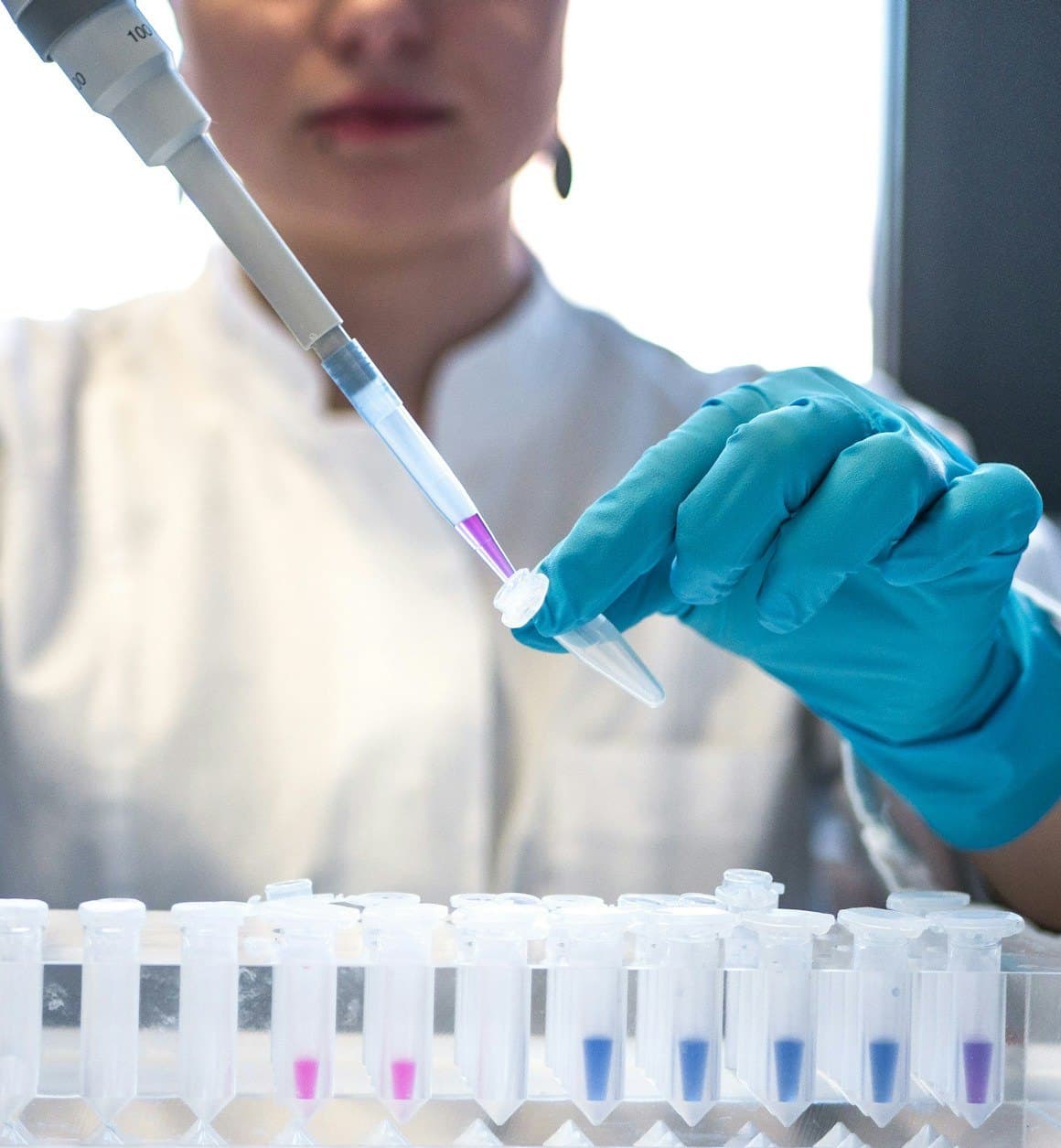
Proof from imaware, SuperTruth’s diagnostics company
“We handed SuperTruth 105,000 diagnostic records. Questions that used to take my team three weeks come back in two hours, and my business team asks them in plain English. The first analysis found the customer segment driving 20% of our revenue, one we had never identified before.”

Brodie Flanders
CEO, imaware, SuperTruth’s diagnostics company
105,000
records standardized
3 wk → 2 hr
analysis time
20%
of revenue, segment found
Data Trust Index
The authorization layer for health data
DTI scores the record, not the patient. Every record is scored across eight dimensions before anything downstream acts on it. Weights adjust per use case: healthcare prioritizes consent and provenance, research prioritizes accuracy and consistency.
Source pedigree, device attestation, and chain-of-custody. Where did this data come from, and can you prove it?
Explicitness, scope, duration, and revocation hygiene. Was the person asked, and does that consent still hold?
Time-decay calibrated by modality. A CBC result ages differently than a continuous HRV stream.
Resolution, completeness, missingness, and noise floor. How clean and complete is the record itself?
Corroboration across independent sources. Does the lab result agree with the wearable? Does the EHR match the claim?
Clinical linkage to outcomes and peer-reviewed evidence. Is this data type established as clinically meaningful?
Dimensional richness across biomarkers, biometrics, and contextual signals. A richer record is a more trustworthy one.
Variance control and test-retest reliability. Does this record produce consistent measurements over time?
VIGIL
DTI scores the record. VIGIL scores the agent.
The Truth Agent in the corner of this page is registered with VIGIL; every reply it gives is scored. Live from VIGIL.
The Truth Agent on this page, as VIGIL scores it
live from VIGIL · 17 Oct, 00:54 ETGate
PASS
Behavioral Integrity Index
0.938
0.0 to 1.0 · 42 events in window
Four signals
- Score inflation 1.00
- Config tampering 1.00
- Alignment faking 0.75
- Asset movement 1.00
Sealed ledger
broken
16,758 entries · head 00000000…
Every reply the agent gives is an event VIGIL scores. A HOLD or worse pauses it for a human. How VIGIL scores an agent →
Sean's Friends
We will never profit from children.
Sean's Friends is a donor-advised fund SuperTruth launched on 1 May 2026. Every dollar of pediatric revenue goes to it, permanently, for pediatric research, children's hospitals, and families facing a rare disease diagnosis.
About Sean's FriendsBuilding trust, building results
Better patient outcomes, proven at the source.
Cloud is how we deliver. Proof is what we sell. Bring us one hard question and watch the answer arrive with its sources attached.
Prefer to read first? The DTI white paper is citable and permanent.